Pittsburgh Web Design That Turns a Visitor Into a Phone Call.
A website is not a brochure and it is not an award entry. It has one job: take the person who just found you and make calling you the obvious next thing to do. Three ways in below, all three prices on the page, and a straight answer on which one you actually end up owning.
Nobody Ever Hired You Because Your Website Was Beautiful.
They hired you because they landed on a phone, understood almost immediately what you do and whether you cover their town, believed you were real, and found the button. That is the whole mechanism. Everything else on a website is decoration, and decoration is fine, but it is not what pays.
It Loads Before They Leave
Most of your visitors are on a phone, on cell data, standing somewhere. A site that makes them wait has already lost a share of them, and you will never see those people in any report because they never arrived.
It Says What You Do and Where
The most common expensive mistake we see is a homepage that leads with a slogan instead of a service and a town. A visitor should not have to work out whether you cover them. If they have to guess, they leave and ask someone else.
It Asks for One Thing
A page with five equal options gets fewer actions than a page with one. Call, or fill in the form. Not call, or email, or chat, or download, or follow, or subscribe, all in the same size type.
Three Ways In. Real Numbers, No Discovery Call Required.
Add-ons like ads management, local SEO and social are priced separately, and they are the only thing on top of these numbers. The difference between the three is not quality. It is how much you pay up front and how much you own at the end.
Operation Lightspeed
For the business that has no website at all and needs one today.
- 1 Page Website
- Built in 299 Minutes or It's Free
- Review Posting Automation
- Google Reviews Automation
- Domain, Hosting & Maintenance
Operation Hyperdrive
The whole system, nothing up front. This is what most people pick.
- 50+ Page Smart Website
- Facebook & Google Page Setup
- Quote Form
- Domain, Hosting & Maintenance
- Review Post & Reply Automation
- CRM System
- Business Phone Number
- Website Chat
- Central Inbox App
- Customer Reactivation Campaign
Authority Foundation
Pay once, own the asset. The monthly is hosting and upkeep, not rent.
- 50+ Page Smart Website
- Facebook & Google Page Setup
- Quote Form
- Domain, Hosting & Maintenance
- Review Post & Reply Automation
Four Steps, and You Are Only Needed for Two of Them.
The reason web projects go badly is almost never design. It is that nobody told the owner what was expected of them or when. So here is the whole shape of it, including the two points where the project waits on you.
We Talk
One conversation about how your business actually makes money. Which jobs you want more of, which ones you would rather stop taking, what your customers ask before they book. This is the part that decides what the site says, and it is the hour that matters most.
Design & Build
We build the real thing, not a mockup you have to imagine into existence. You see it on your own phone at a real URL. Copy, structure, forms and automations all go in together, because a beautiful page with a broken form is worth nothing.
Refine
You go through it and tell us what is wrong. This is the second point where the project waits on you, and it is where timelines slip: a review sitting in someone's inbox for two weeks costs two weeks. We would rather have blunt feedback fast than polite feedback late.
Live, and Working
We point the domain, confirm the forms land where they should, and check it on real devices, not a simulator. Then the maintenance is ours. You are not left with a login and a wish of luck.
Eight Sites We Built, and You Can Open Every One of Them.
Portfolios are easy to fake, so none of these are mockups or concepts. They are live businesses taking real enquiries, and every card below opens the actual site in a new tab. Look at them on your phone, which is where most of their customers are.
Multi-Page Sites, Built to Answer Everything Before the Call.
These carry a full service list, service areas, galleries and booking or quote flows. The job here is to answer every question a buyer has, so the person who calls you is ready to hire, not still shopping.
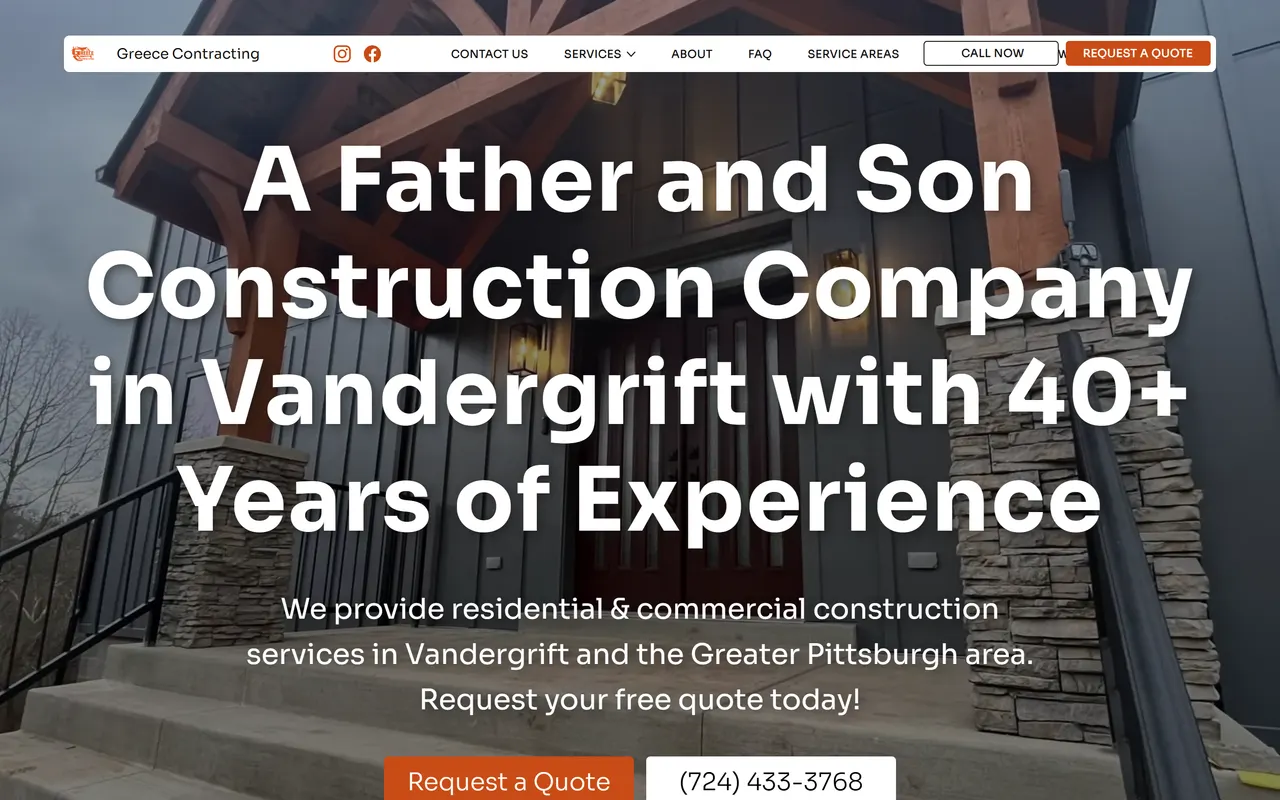
Greece Contracting
Commercial & Residential Construction · VandergriftForty years of work across construction, roofing, siding, windows, flooring and concrete. The site has to sort a homeowner from a commercial buyer before anyone picks up the phone, so services and service areas both get real pages.
Open greececontracting.com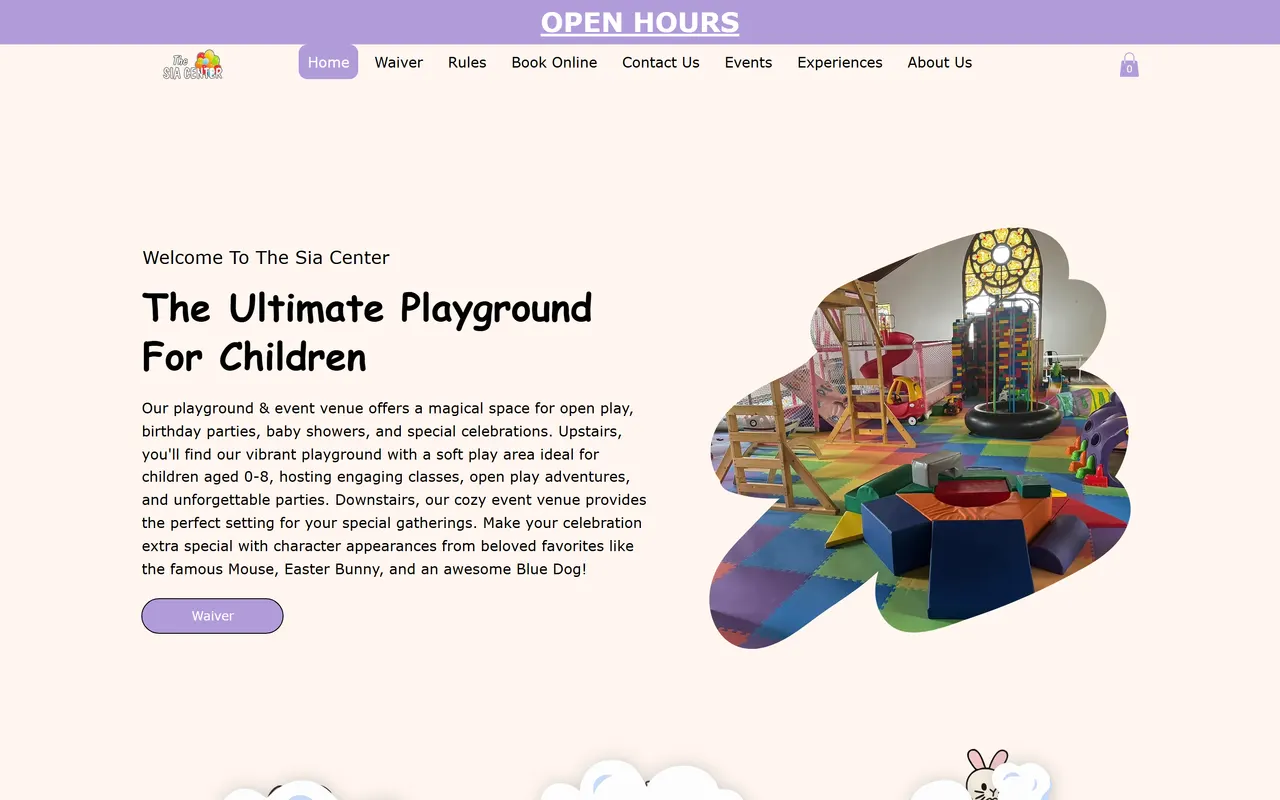
The Sia Center
Indoor Playground & Event Venue · VandergriftOpen play, birthday parties and private events for children up to eight. This one is a booking engine wearing a website: online reservations, digital waivers, an events calendar and party packages all have to work without a phone call.
Open thesiacenter.com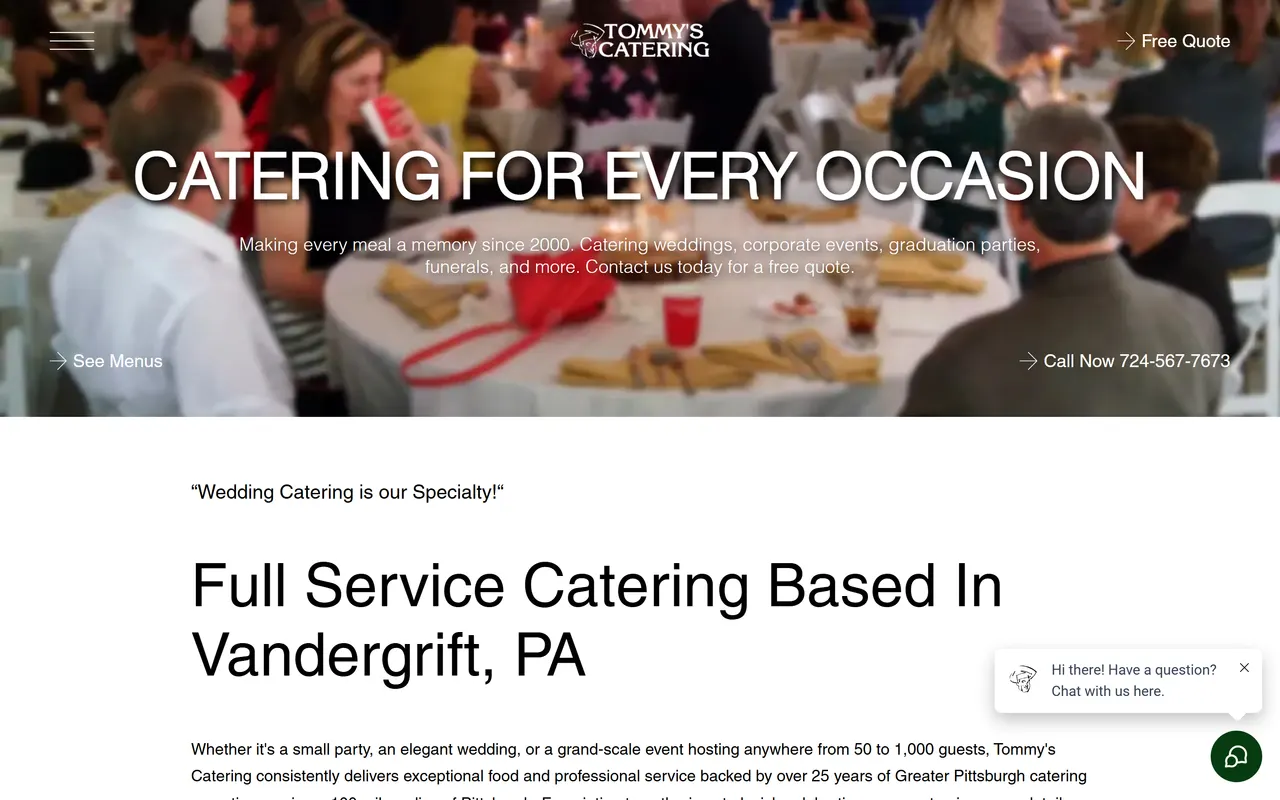
Tommy's Catering
Wedding & Event Catering · VandergriftTwenty-five years of catering weddings, corporate events and funerals. Built around one visitor: an event planner on a phone who needs a menu, a capacity and a quote form inside two taps.
Open tommyscateringpa.com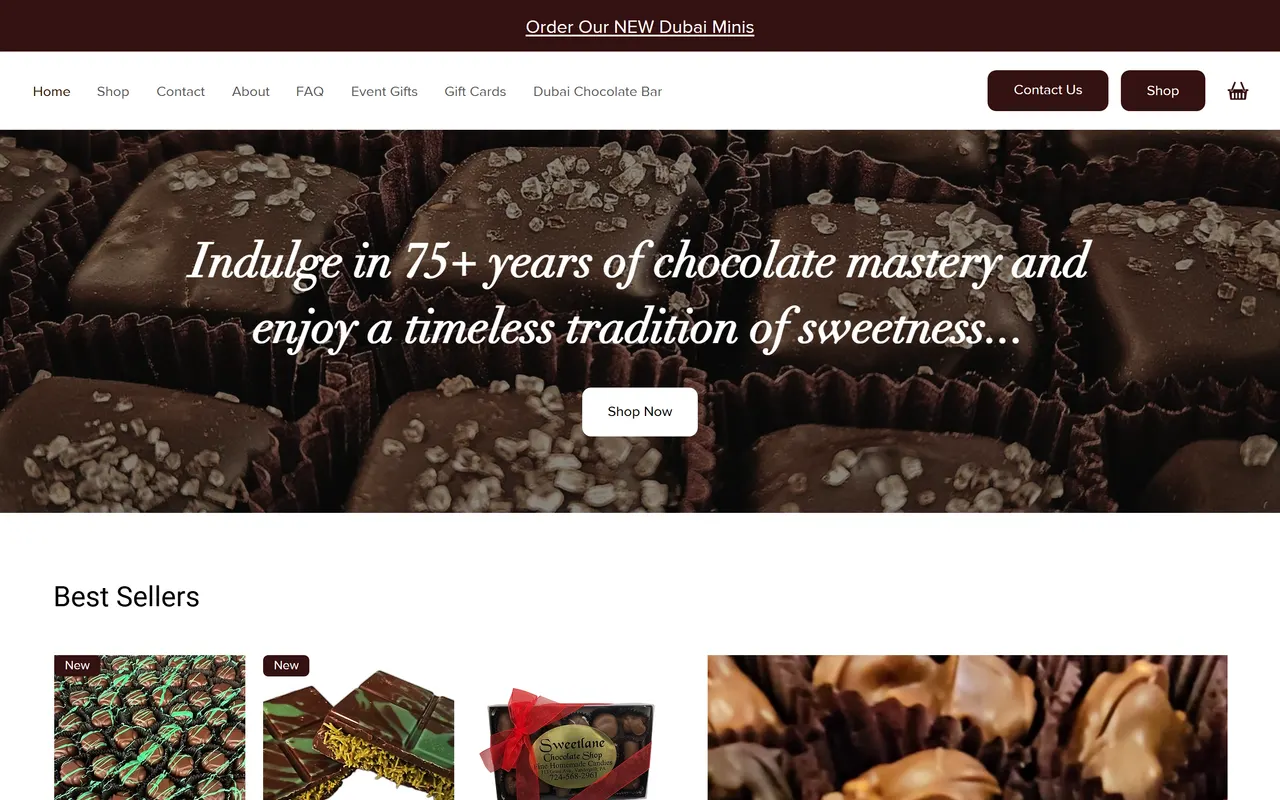
Sweetlane Chocolate Shop
Handmade Chocolate for 75 Years · VandergriftSeventy-five years of making chocolate by hand, and none of it was on the old site. Built in four weeks with over two hundred photos and videos shot for it, and the original logo redrawn rather than replaced.
Open sweetlanechocolate.comSmaller Sites, Doing One Job Properly.
A trade business does not need fifty pages. It needs one page that says what you do, where you do it, and what it costs to find out, with a quote form and a phone number never more than a thumb away.
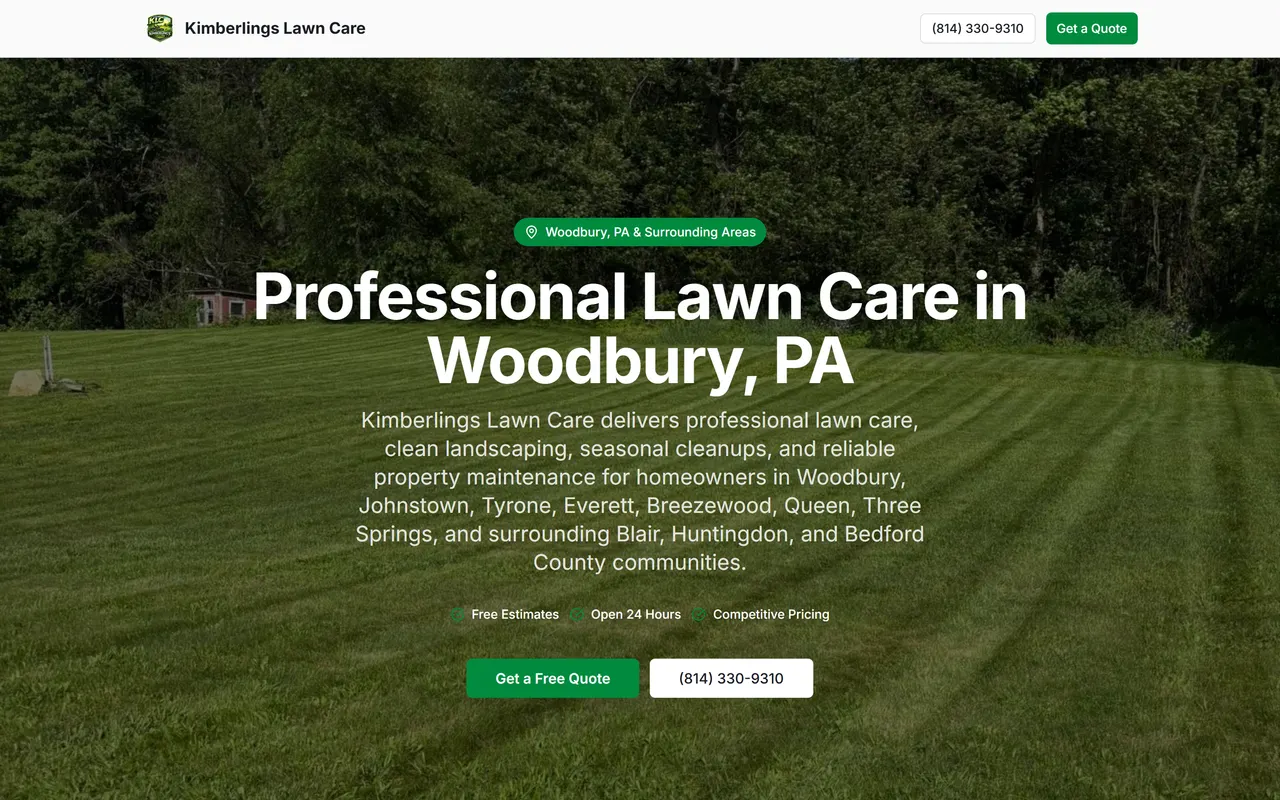
Kimberlings Lawn Care
Lawn Care & Snow Removal · Woodbury, PAMowing, mulching, edging and seasonal cleanups in summer, then snow removal around the clock in winter. Two businesses in one year, so the site has to switch which one it sells depending on the season.
Open kimberlingslawncare.com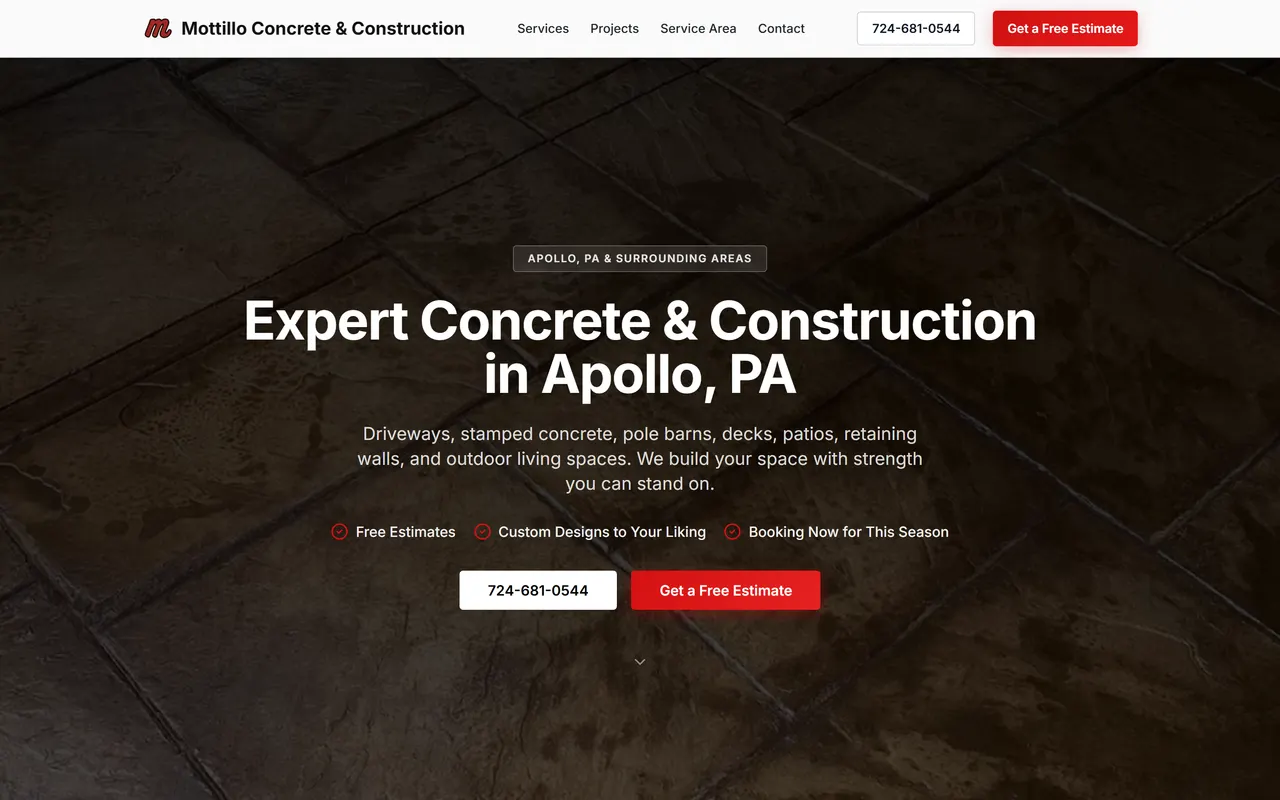
Mottillo Concrete
Concrete & Hardscape · Apollo, PADriveways, stamped patios, pool decks, retaining walls and built-in fire pits. Concrete sells on what it looks like finished, so the build is mostly a project gallery with a free estimate attached to it.
Open mottilloconcreteandconstruction.com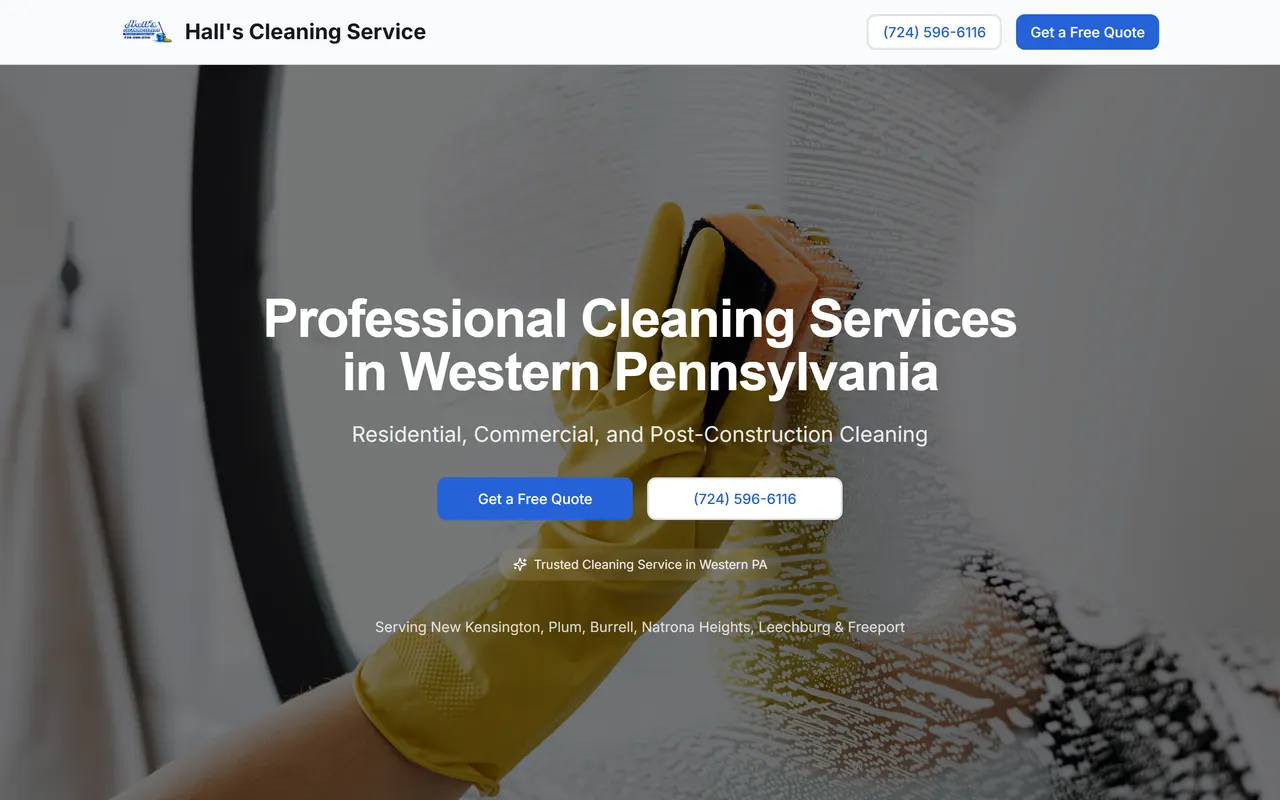
Hall's Cleaning Service
Residential & Commercial Cleaning · New KensingtonHomes, offices and post-construction cleanups across New Kensington, Plum and the surrounding towns. Three very different buyers, so the page names all three plainly instead of hiding them behind the word "cleaning".
Open hallscleaningservicepa.com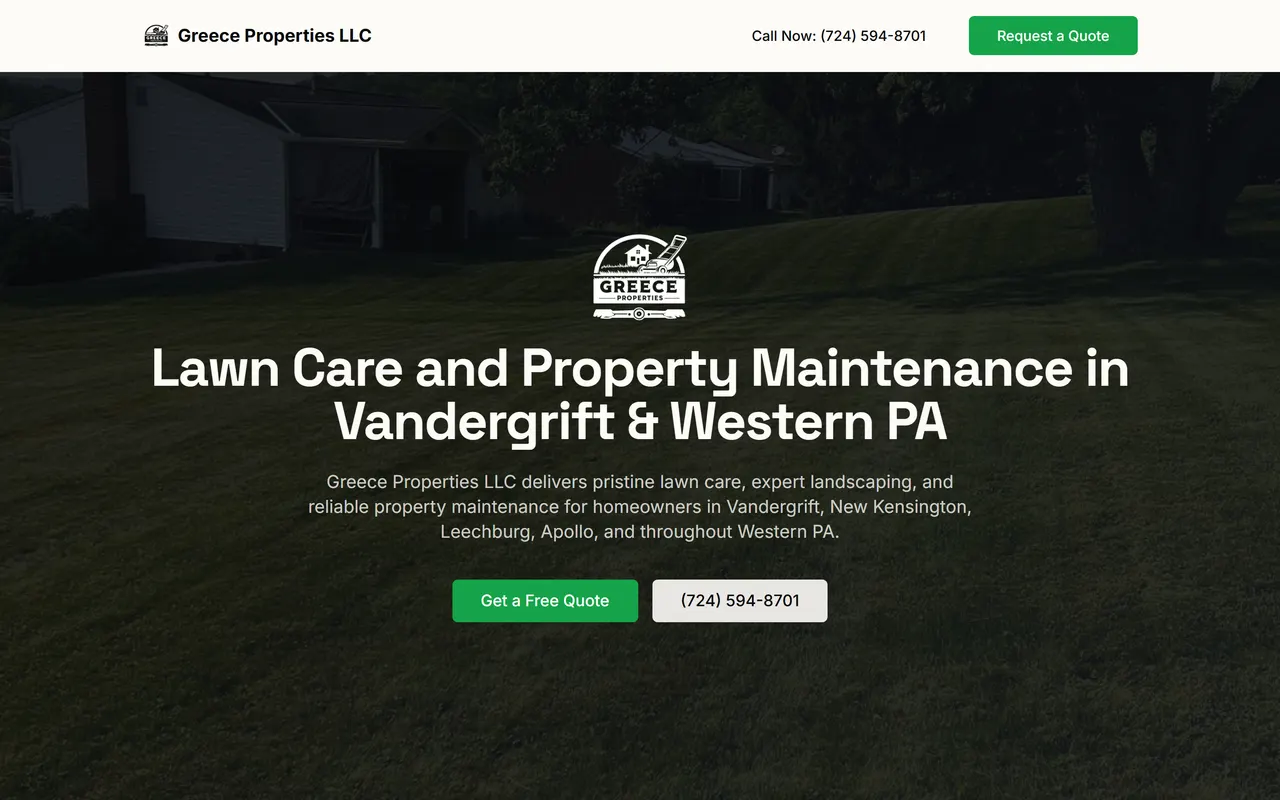
Greece Properties
Lawn Care & Landscaping · Western PALawn care and small landscaping across Vandergrift, New Kensington, Leechburg and Apollo. A free quote is the only thing being asked for, so nothing on the page competes with it.
Open greecepropertiesllc.comWhat the Build Was Actually Solving.
A screenshot shows you the look, which is the least interesting part. Both of these had a problem that had nothing to do with the site being dated, and in both cases the fix was about what the site was asking the visitor to do.
Sweetlane Chocolate Shop
The problem was never the design. It was that the counter was the bottleneck. Orders, reviews and enquiries all landed on whoever happened to be standing there, between actual customers, and the busiest days were the ones where the most got dropped.
So the build was aimed at making the shop run itself. The site takes the order, asks for the review, routes the enquiry, and nobody has to do data entry with a queue in front of them. The photography mattered because chocolate sells on how it looks, but the automation is what changed the day.
See the Sweetlane buildTommy's Catering
Twenty-five years of word of mouth had built a business that was invisible to anyone who had not already heard of it. Every enquiry started with a phone call, which meant every enquiry that came in after hours simply did not happen.
The fix was to let the site do the qualifying: menu, capacity and a quote form that works at eleven at night. We also put an existing print advert to work by having it scan straight through to that form, so money that had been going out with no way of counting what came back finally had a number attached to it.
See the Tommy's buildTwo of These Plans Are Rented. One Is Owned. Here Is Which.
Most agencies leave this vague until you try to leave. It is the difference between the monthly plans and the $3,000 one, it is the main reason to pick one over the other, and you should know it before you pay, not after.
Lightspeed and Hyperdrive
We hold the domain and the hosting.
That is what makes $0 or $499 up front possible instead of $3,000. We buy the domain, we host it, we maintain it, and we run the automations, and the monthly fee is what pays for all of that. If you stop paying, the hosted site stops being hosted.
If you want to leave and take the website with you, you can. There is a buyout to do it, and we will tell you the number the day you ask, so it is never something you discover at the worst possible moment.
Authority Foundation
The site is yours outright.
That is what the $3,000 buys and it is the entire reason this tier exists. No buyout, no dependency on us. You can move it, hand it to another developer, or keep it running on your own.
Everything else on this page is the same calibre of build, so ownership is genuinely the whole decision.
Your content is a separate question from your domain, and the answer there does not change by plan. The words we write for you and the photos of your work are yours on all three, and you can take them anywhere.
There is no twelve month contract on any of these plans. You tell us you are done and you are done. The buyout is about taking the site with you, not about being allowed to stop.
Worth Saying Plainly, Before You Spend Twenty Minutes on a Call.
This Is for You If
- ✓You run a real business with customers and you want more of the jobs you already do well.
- ✓You would rather see three prices on a page than sit through a call to find out one.
- ✓You can give us an hour at the start and honest feedback in the middle.
- ✓You want the phone to ring more than you want to win a design award.
This Is Not for You If
- ✕You need custom software, not a website. Quote forms, booking and a CRM yes. A platform with user accounts and its own logic, no.
- ✕You need someone on site with you. We build remotely and we are good at it, but we are not going to be sitting in your office.
- ✕You want a design-only refresh, with the existing words moved across untouched. We do not take those, because it is the one version of this job that reliably does not pay for itself.
Two things that are not disqualifiers, even though plenty of agencies treat them that way. If the price is the problem, say so. Operation Lightspeed exists for exactly that: $499 gets a real one page site live today, written and built for you, which is a better starting point than a template you have to finish yourself on a weekend. And if your worry is that more calls would swamp you, that is what the CRM, the business phone number, the chat and the central inbox on Hyperdrive are for. Tell us the constraint and we will point at the tier that fits it.
The Things People Ask Before They Sign.
How long does a website take?
A one page Lightspeed site goes live the same day, inside 299 minutes, or the build is free.
A full 50+ page build typically runs two to eight weeks depending on the page count and any custom functions. The biggest factor is almost never us. It is how fast you can get us images, copy and feedback, and the projects that stall are the ones where a review sits in someone's inbox for two weeks.
Which of the three should I pick?
If you have no website at all and you need one today, take Lightspeed. If you want the whole system running for you and you would rather not pay a lump sum up front, take Hyperdrive, which is what most people choose. If you want the site to be an asset on your books that you own outright with no ongoing dependency on us, take Authority Foundation.
If you are not sure, say what you do and roughly what a job is worth to you and we will tell you which one, including when the answer is the cheapest one.
Do I own the website?
Depends on the plan, and this is the real difference between them. On Authority Foundation, yes: the $3,000 buys the site outright and it is yours to take anywhere.
On Lightspeed and Hyperdrive we hold the domain and the hosting, and the monthly covers hosting, maintenance and the automations. That is what makes $0 or $499 up front possible instead of $3,000. If you want to leave and take the site with you there is a buyout, and we will tell you the number when you ask. Your content and your photos are yours on all three plans either way.
What happens if I want to leave?
You tell us and you leave. There is no twelve month contract on any of the three plans, and stopping is always allowed.
Taking the website with you is the separate question. On Authority Foundation it is already yours, so you just take it. On Lightspeed and Hyperdrive we hold the domain and hosting, so there is a buyout to take it over, and we will give you that number whenever you ask for it. Your content and photos come with you regardless.
Do you write the words and take the photos?
We write the words. Photos depend on the project.
For Sweetlane we shot and edited over two hundred photos and videos, because a chocolate shop lives or dies on how the product looks. For most home service businesses your own job photos beat anything we could stage, so we would rather coach you on what to send than bill you for a photo day you do not need.
Can you rebuild a site I already have?
Yes, and it is a large share of what we do. Most rebuilds we get called about are not ugly, they are just slow on a phone and unclear about what to do next.
We keep what is working, including your logo if you like it, and we do not throw out fifteen years of brand recognition because a redesign felt overdue. On Sweetlane and Tommy's we restored and modernized the existing logos rather than replacing them.
Do I need SEO and ads as well?
Not on day one, and we would rather you did not buy all of it at once. A website with nobody arriving at it is a brochure in a drawer, so traffic matters eventually, but the order matters more.
Get the site right first, then add local SEO if you serve an area, then ads if you need the phone ringing faster than SEO can manage. Those are priced separately and are not bundled into these numbers.
Tell Us What You Do. We'll Tell You Which One You Need.
One conversation, no deck. What you do, who calls you, and what a job is worth to you. We come back with which of the three fits, a real number, and the reasoning, including when the right answer is the cheapest one on the page. Most of the sites we build are for businesses around Pittsburgh, though being nearby matters less for a website than for anything else we do. If you want it sooner than a normal build allows, the same build, live in 299 minutes is a different route to the same site.