 Nick Lookabaugh
On this page
Google's "Have AI Get Prices" uses AI agents to phone multiple local businesses on a shopper's behalf, checking availability and prices in real time, then reporting back with quotes.
TLDR: The feature creates a path of least resistance when someone is looking for a service in Google Search. It offers benefits like cost efficiency and operational streamlining by automating price inquiries. Local businesses can prepare by verifying listings, training staff, and testing their own intake. The catch: if you don't answer clearly, you don't get included.
Artificial intelligence is no longer a futuristic concept. It is reshaping how consumers find and compare prices for local services right now. This article covers the nuts and bolts of the feature, its tangible benefits, and how to put it to work.
How Does Google's "Have AI Get Prices" Work for Local Businesses?
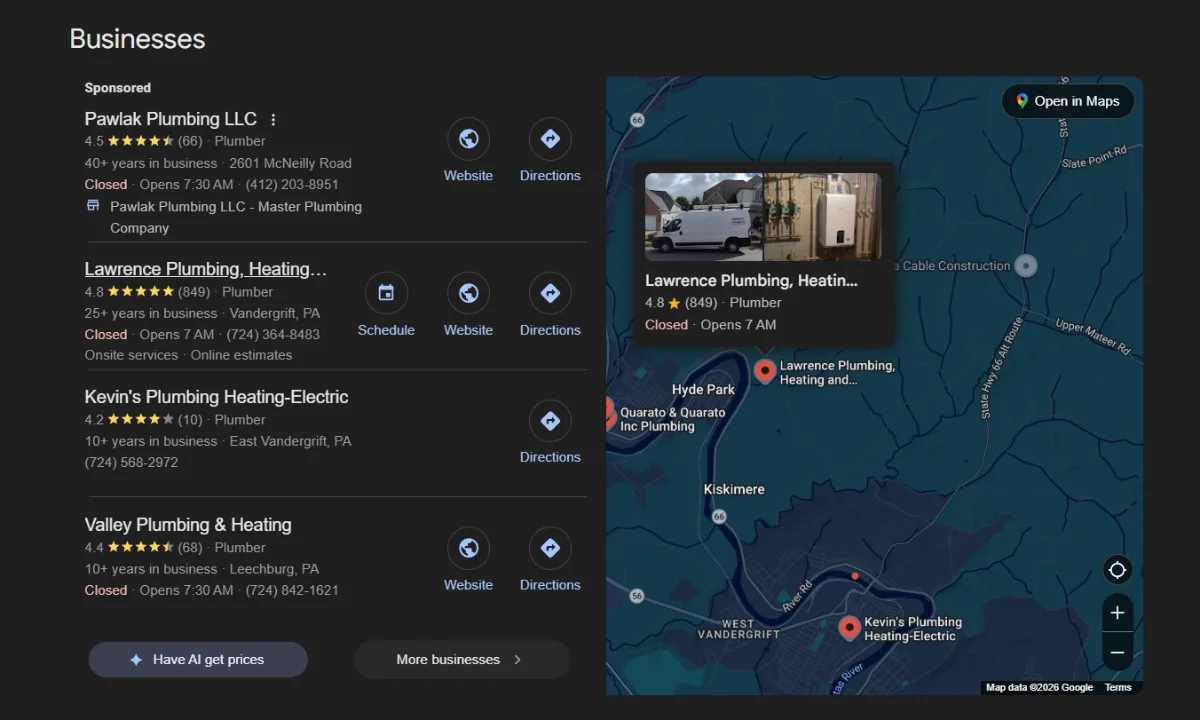
At its core, the technology uses AI agents that contact local businesses by phone to ask about the type of service needed, pricing, and availability. The AI then summarizes that information and reports back to the user with quotes from various providers. The feature is currently available in English to signed-in users over 18 in the US, on both mobile and desktop. Google documents how to check pricing for local businesses with AI in Search if you want to test it yourself.
What Are AI Agents and Their Role in Price Comparison?
AI agents here are software systems that automate the process of contacting multiple businesses to gather pricing and availability. Unlike bots that scrape websites, these agents make phone calls to service providers, share the customer's needs, and collect responses. Shoppers receive consolidated quotes without calling each business individually. AI responses can include mistakes, so human judgment still matters.
What Are the Benefits for Local Businesses?
- Cost efficiency. Reduce the time spent responding to individual price inquiries by letting AI handle initial contact.
- Competitive edge. Gain exposure to customers actively seeking your services, and respond quickly to demand.
- Operational streamlining. Free staff to focus on service delivery rather than repetitive price questions.
Visibility Risk: What Happens if You Don't Respond Effectively?
Visibility in Google's AI-driven price inquiry system depends heavily on how businesses respond to AI-initiated calls. If a business does not answer promptly, it risks being excluded from AI-generated recommendations. Slow response times signal lower reliability, which can push your business down or out of the list presented to shoppers. Inconsistent or unclear pricing responses also reduce the likelihood of inclusion. Accessibility is no longer just about being open; it directly affects your visibility in search results.
Buyer Journey Compression: From Search to Booking Faster Than Ever
The feature compresses the traditional buyer journey by reducing the steps between search, quote, and booking. Instead of filling out multiple forms or making several calls, shoppers interact first with AI agents that gather quotes quickly. That shortens the time between recognizing a need and making a decision, and it changes how local SEO works. Businesses must now optimize not just for discovery but for rapid, accurate response.
Why Intake Is Now Part of Your SEO
How quickly you answer calls, how clearly you explain pricing, how consistently you confirm availability, and how frictionless your scheduling is: all of these now influence your search performance. This is not traditional marketing. It is about being prepared to engage effectively at the very first point of contact.
What Questions Will Google's AI Actually Ask?
Google's agents generally follow a simple, repeatable intake process:
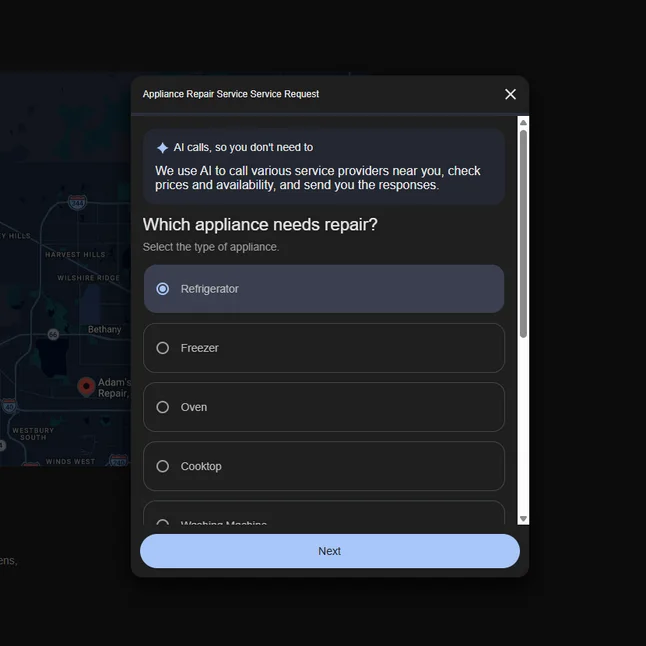
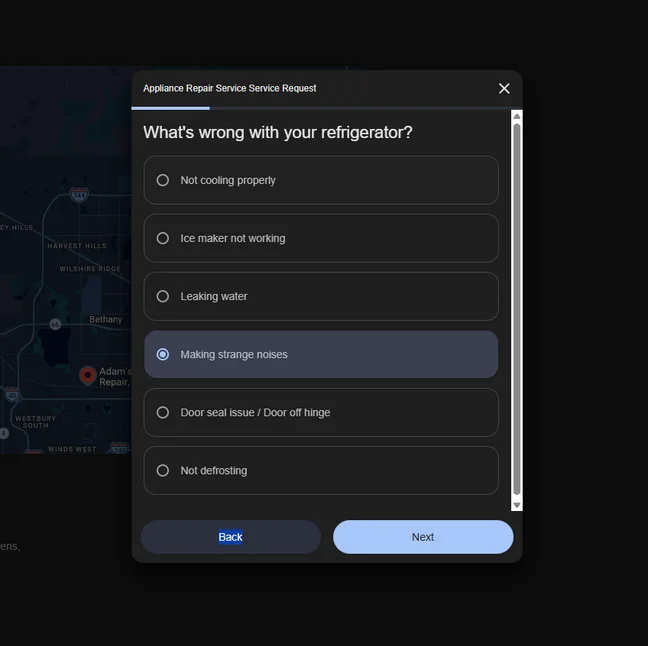
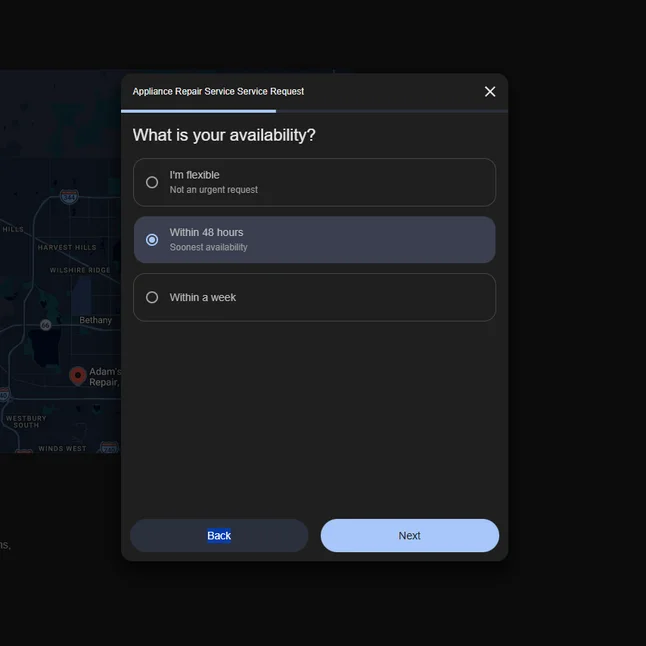
- Confirm job type and location. "Do you service this area?"
- Confirm availability. "What is your earliest availability?"
- Share pricing stance. "Can you provide a pricing range?"
- Offer next step. "What is the next step for the customer?"
Training your staff to handle these clearly and consistently will improve your chances of inclusion.
Accessibility and Speed Signals
Missed calls and after-hours inquiries can significantly affect your visibility. Google's AI expects businesses to be reachable, or to have alternatives like chat or SMS ready. Online booking and rapid response send strong signals of operational excellence. Speed-to-lead is now a metric for inclusion, not just convenience.
What We're Hearing From Inside the Industry
We reached out to an HVAC employee to get a sense of how this is landing on real businesses. So far, they have not received any AI-initiated calls from Google's system. He did note that AI systems are already answering many of their incoming calls, handling routine inquiries and routing customers. AI is already embedded in business operations even where the direct price-inquiry calls are still rolling out. Many industries are in the initial phase of this transition, and may not yet realize how close the shift is to standard practice.
We Tested Google's "Have AI Get Prices"
We ran a test search across three service categories currently in testing: mechanic, plumber, and appliance repair. The AI agent collected detailed job information such as vehicle type, specific service needed, and timeline. It then called multiple local businesses on our behalf.
In the mechanic test, the AI contacted 7 businesses. Only 2 answered and provided pricing. The other 5 either did not respond or did not provide pricing details.
We received an email summarizing the results: pricing summaries from the two responsive businesses, their contact information, and a list of businesses that "couldn't be reached." The feature consolidates pricing efficiently, but its usefulness depends heavily on business responsiveness and willingness to share pricing.
Response Failure Insight
If a business does not answer the AI-initiated call, it appears under "Businesses we couldn't reach," which reduces its visibility to potential customers. If a business refuses to provide pricing, it risks not being included meaningfully in the recommendations. Many businesses may currently dismiss these calls, either from unfamiliarity or uncertainty about how to respond. That behavioral gap leads to exclusion from consideration, not because of algorithmic bias, but simply from lack of engagement.
Why This Matters More Than Most Businesses Realize
Some owners hang up when they detect an AI caller. Some staff are not trained to respond. Others give inconsistent or unclear pricing. The AI does not negotiate, clarify, or argue. It records the response and moves on. If you don't respond clearly, you don't get included.
Connecting to AI Discoverability
AI-led search is expected to expand beyond the current test industries to a broader range of local services. Operational readiness, including fast response times, a clear pricing stance, consistent intake scripting, and accessibility, will be critical to whether a business is recommended. For wider context on where this is heading, see The State of AI from McKinsey.
How Can Local Businesses Get Ready?
Since Google contacts businesses directly, making sure your contact information is accurate and your staff are ready to handle calls is the whole game. A practical roadmap:
- Ensure accurate business listings. Verify contact details and service information on your Google Business Profile and other directories.
- Train your team. Prepare staff to handle calls from Google's agents and provide clear pricing and availability.
- Monitor inquiries. Track the volume and nature of AI-driven inquiries to understand demand.
- Provide feedback. Use customer and staff feedback to improve response quality.
Common Questions
Are these tools expensive for small businesses? Google's feature is free to use for consumers, and businesses only need to be prepared to respond.
Can AI pricing tools replace human decision-making? Not entirely. They augment human insight by automating routine tasks, but strategic decisions still require judgment.
How quickly can a business see results? Results vary, but many businesses notice improvements in engagement within a few months of responding effectively to AI inquiries.
Where AI Search Is Headed Next
The future points toward more AI-initiated inquiries becoming standard. Price comparison will become increasingly standardized, placing greater pressure on businesses to provide clear, consistent pricing. Slow or unclear responses will be less tolerated, directly affecting visibility and customer acquisition. AI integration will expand beyond search into maps, chat, and voice assistants. Businesses that are clear, fast, and consistent will be favored.
Is Your Business Ready to Answer an AI?
If Google's agent calls and nobody picks up, you land in the “couldn't be reached” list. We'll get your intake, listings and response times in shape.